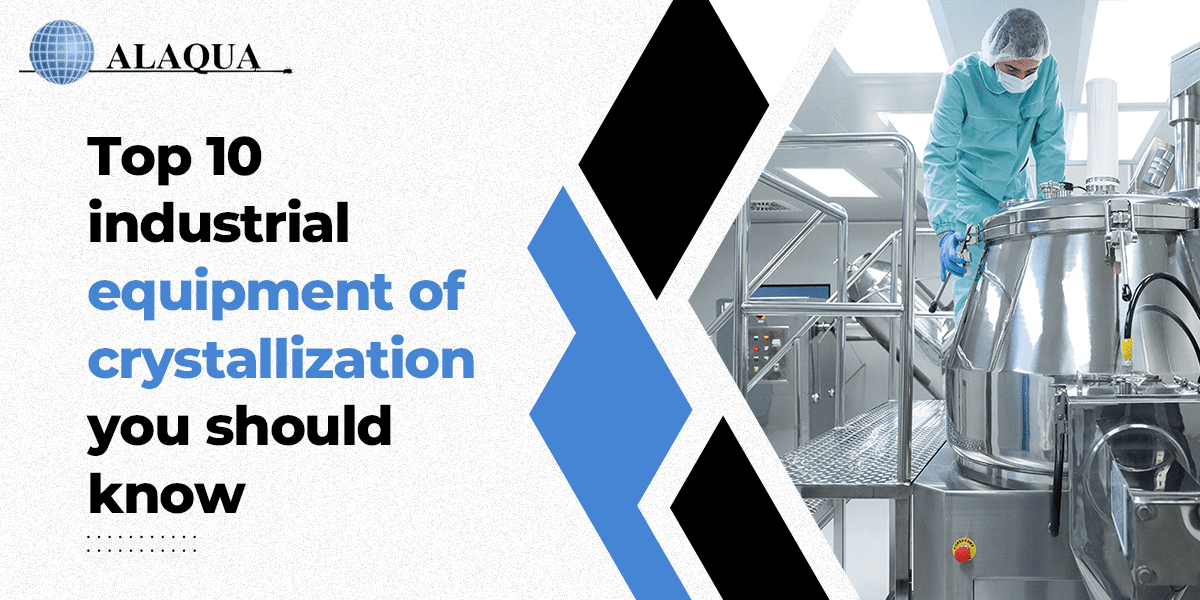
Crystallization plays an important role in modern industrial manufacturing environments. Industries handling chemicals, pharmaceuticals, food processing, minerals, and wastewater treatment often depend on stable systems to maintain product purity and improve recovery efficiency. However, successful crystal formation depends on much more than temperature or chemical balance alone. The performance of the processing system itself directly affects production stability, operating efficiency, and long-term reliability.
At Alaqua Inc., we work closely with industries that require reliable crystallizer equipment for demanding production environments. Over the years, we have seen how the right equipment of crystallization improves process stability, reduces operational pressure, and supports better long-term plant performance. A properly designed system not only improves crystal formation but also helps facilities maintain smoother production conditions throughout daily operations. That is why selecting the right equipment for crystallization becomes an important part of industrial process planning.
Why Crystallization Equipment Matters in Industrial Operations
Industrial crystallization is not simply about separating solids from liquids. The process itself requires balanced circulation, controlled evaporation, stable cooling conditions, and proper operating pressure throughout production.
When these conditions become unstable, industries may start facing:
- uneven crystal formation
- excessive scaling
- higher energy consumption
- inconsistent product quality
- operational inefficiencies
Over time, these issues directly affect both production performance and operating costs.
At Alaqua Inc., we help industries evaluate equipment of crystallization based on actual operating conditions instead of general assumptions. Different industries handle different materials, and every system should support the specific process behavior inside the operation.
1. Forced Circulation Crystallizer
Forced circulation systems are widely used in industries handling viscous liquids or materials that easily create deposits during processing.
These systems maintain continuous liquid movement through external circulation pumps. As a result, they improve heat transfer while reducing scaling problems during operation. This helps industries maintain more stable production conditions during continuous processing cycles.
Industries commonly use these systems for:
- fertilizer manufacturing
- salt production
- wastewater concentration
- chemical processing
One major advantage of this equipment of crystallization is its ability to handle difficult operating environments more efficiently during large-scale production.
2. Draft Tube Baffle Crystallizer
Draft tube baffle systems are designed to improve internal circulation and crystal growth control.
The draft tube supports balanced liquid movement, while the baffle structure improves circulation stability inside the chamber. This helps maintain more uniform crystal formation throughout the process.
These systems are often preferred where:
- crystal size consistency matters
- product purity is important
- controlled circulation improves production quality
Pharmaceutical and specialty chemical industries commonly use these systems because they provide better control during sensitive production processes.
3. Vacuum Crystallizer
Vacuum crystallizers operate under reduced pressure conditions. This lowers the boiling point of the solution and allows processing at lower temperatures.
At Alaqua Inc., we often recommend these systems for heat-sensitive manufacturing environments where product stability becomes important during evaporation stages.
These systems are commonly used in:
- pharmaceutical manufacturing
- sugar processing
- food production
- specialty chemical industries
Lower operating temperatures help industries maintain better product quality while improving overall energy efficiency during production.
4. Oslo Crystallizer
Oslo crystallizers are mainly designed for producing larger and more uniform crystals.
The system separates smaller particles while allowing larger crystals to continue growing inside the chamber. This controlled process improves crystal consistency during operation.
Industries often use this equipment of crystallization where:
- larger crystal formation is required
- product uniformity matters
- higher purity levels affect downstream processing
Chemical and mineral processing facilities often rely on Oslo systems for applications requiring more controlled crystal growth.
5. Swenson-Walker Crystallizer
The Swenson-Walker system uses a horizontal cooling trough to support gradual crystal formation.
An internal agitator continuously moves the product while cooling takes place across the chamber. This controlled process improves stable crystal growth throughout operation.
These systems are commonly used for:
- cooling crystallization
- salt manufacturing
- chemical production
One reason industries continue using these systems is their relatively simple operating structure compared to more advanced circulation-based technologies.
6. Evaporative Crystallizer
Evaporative systems remove solvent through controlled evaporation until crystals begin forming from the concentrated solution.
Industries handling industrial crystallization processes often use these systems because they support continuous production and larger operating capacities more efficiently.
These systems are commonly selected where:
- solvent recovery matters
- concentration control is important
- large-scale processing is required
Proper evaporation management plays a major role in maintaining stable crystal formation throughout production.
7. Cooling Crystallizer
Cooling crystallizers reduce solution temperature gradually until dissolved materials begin separating as crystals.
These systems are commonly used for materials whose solubility decreases during cooling conditions.
This equipment of crystallization is widely used for:
- food ingredients
- pharmaceutical compounds
- organic chemicals
- specialty materials
Although the process itself appears straightforward, stable temperature control still becomes critical for maintaining product consistency.
8. Batch Crystallizer
Batch crystallizers process materials in separate production cycles instead of continuous operation.
These systems work well for:
- smaller production volumes
- specialty compounds
- research applications
- flexible manufacturing environments
Many industries still prefer batch systems because they allow easier process adjustments between production runs while supporting operational flexibility.
9. Continuous Crystallizer
Continuous systems maintain uninterrupted production flow throughout operation.
These systems help industries:
- improve efficiency
- reduce downtime
- support higher production capacity
- maintain stable output levels
At Alaqua Inc., we often see continuous systems preferred in facilities where production consistency directly affects long-term operational performance.
10. Fluidized Bed Crystallizer
Fluidized bed systems suspend crystals using controlled upward liquid movement during operation.
This movement improves:
- heat transfer efficiency
- crystal growth consistency
- circulation stability
- process control
Modern equipment of crystallization increasingly uses fluidized bed technology because it supports better operational precision during advanced manufacturing applications.
Choosing the Right Crystallization Equipment
Not every crystallization system performs the same way under different industrial conditions.
Equipment selection usually depends on:
- production scale
- material behavior
- operating temperature
- crystal size requirements
- maintenance expectations
- energy efficiency goals
At Alaqua Inc., we help industries evaluate these conditions carefully before recommending solutions. A setup that works efficiently in one facility may not deliver the same results under completely different production environments.
That is why process understanding matters just as much as equipment design itself.
Modern Industries Need Smarter Crystallization Systems
Industrial operations continue becoming more process-focused every year. As manufacturing environments become more advanced, businesses now expect systems that support better efficiency, lower downtime, stable product quality, improved energy management, and long-term operational reliability throughout production environments.
Because of this, modern equipment of crystallization is now designed with stronger focus on:
- process stability
- production control
- operational durability
- maintenance efficiency
- long-term reliability
Industries no longer evaluate systems only through output capacity alone. They now focus more heavily on long-term operational performance before making investment decisions.
Conclusion
Crystallization equipment plays a major role in maintaining product quality, process stability, and production efficiency across multiple industries. From vacuum systems to continuous circulation setups, every solution supports different operating conditions depending on material behavior and production requirements.
At Alaqua Inc., we understand that selecting the right setup involves much more than choosing systems based only on production capacity. The right solution should improve process control, operational reliability, energy efficiency, and long-term manufacturing performance together. That is why industries today focus more carefully on equipment used for crystallization that can support stable operations, consistent output, and better production control throughout demanding industrial environments.