Industrial evaporation is not just about removing water from liquid. It is about maintaining the standard concentration while having no effect on product quality. It’s also keep eye on reducing energy consumption while maintaining consistent production. There are many industries that depend on evapourating system, such as food processing, chemical, and power generation.
As there producing have a dependency on evaporation, therefore, to select the right pump for the evaporator is an important part of engineering, not a simple equipment purchase.
Understanding a Pump Evaporator
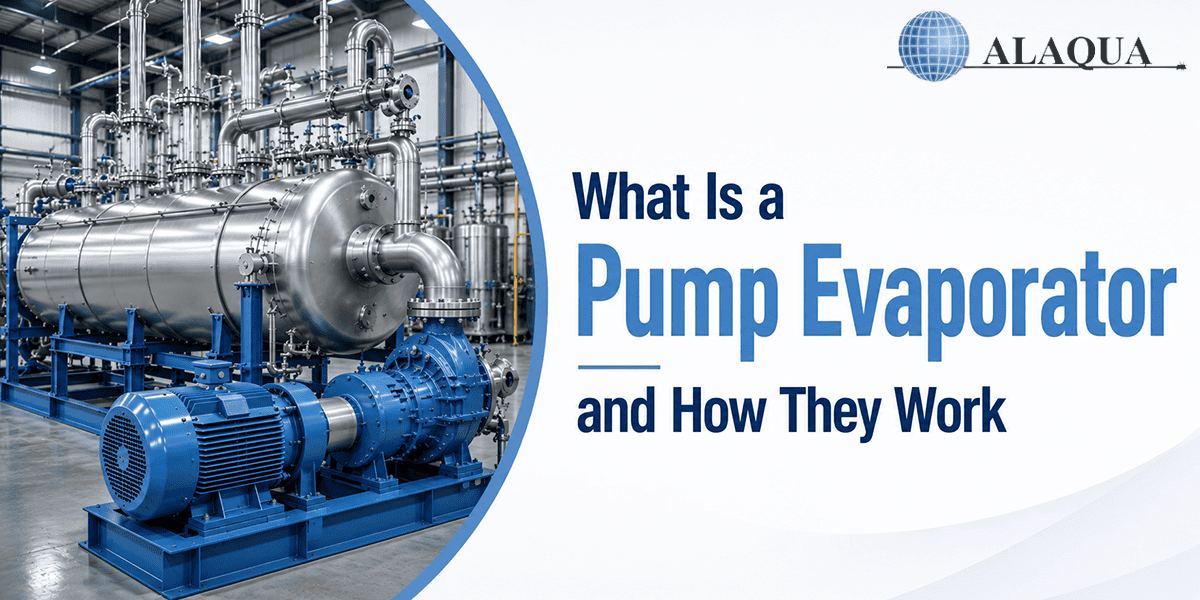
A pump evaporator is a system that uses a circulation pump to move liquid through an evaporation chamber and heat exchanger. It doesn’t pass liquid once but recirculates again and again. Due to this continuous movement, heat transfer and liquid become thin, or if they contain suspended solids during concentration, it also becomes rarer. The circulating pump takes charge of product moving with controlled velocity by reducing the heat transfer. While this transfer is stable, operations are in a controlled environment. This approach makes the system suitablefor demanading industricial application where conventional evaporation methods fail to deliver the expected performance.
Why Continuous Circulation Matters
Every evaporation process changes the liquid being processed. As water evaporates, the remaining solution becomes denser and more difficult to handle. Without proper circulation, heavier products may settle, form deposits, or create uneven heating across the equipment.
Continuous circulation solves these challenges by keeping the product in constant motion throughout the evaporation cycle. The result is more uniform heat distribution, improved operating efficiency, and better control over the concentration process. Industries processing wastewater, chemical solutions, food ingredients, and high-viscosity products often benefit from this operating principle because it supports stable production over extended operating periods.
How Does a Pump Evaporator Work?
Although different evaporation systems vary in design, the operating principle remains straightforward. The liquid first enters the system through the feed line before the circulation pump moves it toward the heating section. Steam or another heating medium transfers thermal energy through the heat exchange surface, raising the product temperature until part of the liquid begins to evaporate.
The generated vapour separates from the concentrated liquid inside a vapour separator. The concentrated product either leaves the system as the final output or continues circulating for additional concentration until the required specification is achieved.
The Main Components Behind the Process
A reliable evaporation system depends on several components working together rather than a single piece of equipment.
These typically include:
- Feed system for introducing the product.
- Circulation pump that maintains continuous flow.
- Heat exchanger for efficient heat transfer.
- Vapour separator for separating vapour from liquid.
- Condenser and vacuum system where required.
- Instrumentation for temperature, pressure, and process control.
Each component influences overall efficiency. A well-designed system balances heat transfer, circulation, and process control to achieve consistent product quality while reducing unnecessary energy consumption.
Where Does This Technology Fit Among Different Pump Evaporators?
Industrial processes rarely use one evaporation design for every application. Product characteristics, production capacity, fouling tendency, viscosity, and energy requirements all influence equipment selection. That is why engineers evaluate the Type of Evaporator based on process requirements instead of choosing equipment solely by capacity.
Comparing Pump Evaporators with Plate Evaporators
Unlike conventional tubular systems, a Plate Evaporator transfers heat through a series of corrugated plates. The larger heat exchange area allows heat to move efficiently while keeping the equipment compact. Since the product remains inside the evaporator for a shorter period, the risk of unnecessary heat exposure is reduced. This makes plate evaporators a practical choice for processing heat-sensitive products, particularly in food and beverage applications where product quality must be maintained throughout the process.
A pump evaporator is built to handle different processing requirements. It works well with liquids that benefit from continuous circulation, higher flow rates, or better control over deposits that can build up during evaporation. For this reason, one system is not considered a replacement for the other. The right choice depends on factors such as product properties, production capacity, fouling behaviour, and process objectives. Evaluating these requirements before selecting the equipment is the approach Alaqua Machinery follows when recommending evaporation solutions for industrial operations.
Choosing the Right Pump Evaporation System for Your Process
Choosing an evaporation system starts with understanding the product, not comparing equipment specifications. When testing the sample, engineers examine how the liquid reacts when concentration increases. The liquid, which has low density, shows different behavior than product have suspended solids or particles that are less responsive to heat. These characteristics influence circulation, heat transfer, cleaning frequency, and overall system performance.
Other practical considerations also shape the decision. Required production capacity, available utilities, maintenance planning, and operating costs all need to be assessed before the equipment is selected. At Alaqua Machinery, these factors are reviewed together so the recommended evaporation system fits the actual production process instead of relying on a standard equipment recommendation.
Factors That Influence Equipment Selection
No single evaporator performs equally well in every application. Engineers typically compare several process variables before finalising a solution.
Some of the most important considerations include:
- Product viscosity and solids content
- Heat sensitivity of the product
- Required evaporation capacity
- Steam and utility availability
- Fouling tendency during operation
- Cleaning and maintenance requirements
- Energy efficiency targets
- Future production expansion
Looking at these factors together creates a solution that performs consistently throughout the equipment’s operating life rather than only during initial production.
Why Engineering Expertise Matters in Pump Evaporator
An evaporator’s performance starts with the right engineering approach. It’s the process that decides about heat transfer, circulation, and material selection, and together they decide the quality of the product. The value of equipment manufacture is more than supplying machinery. Under the guidance of engineering, we can design equipment that fits the process and ensures reliable machining over time.
Building Solutions Around the Process
Every production facility operates differently. Some require compact systems because of limited floor space, while others prioritise higher throughput or lower steam consumption. Designing around these practical requirements creates better results than adapting production to fit standard equipment.
This engineering-first philosophy is reflected in Alaqua Machinery’s approach to industrial evaporation systems. After combining process analysis with custom design, at Alaqua we develop a solution that fulfills the customer requirement instead of one standard configuration for every application. No matter whether the project is about wastewater treatment, chemicals, or food manufacturing. The working principle is the same: to develop a customized product to solve the problem around the process.
Conclusion
After understanding how a pump evaporator works, it would be easy to choose the right evaporation system for your industrial process. The stability of operation depends on continuous circulation, which improves heat transfer. Due to this, the liquid process takes place efficiently.
While technologies such as plate film evaporators have an edge for product handling while maintaining high thermal efficiencies. Therefore, selecting the right solution depends on product characteristics, product goals, and process requirements, not on equipment specifications. With extensive experience in designing customised evaporation systems, Alaqua Machinery helps industries evaluate these factors and develop solutions that deliver reliable performance, consistent product quality, and efficient long-term operation.